
Electronics Design Consultancy
What we do
Our unique design approach delivers innovative electronic products

Innovation
Modern electronic designs must keep on trend. We innovate to develop new concepts and new tools. These are available for using in your project.
How does it work
DOWNLOADS
White papers, technical notes and use studies
Virtual On-Site™
Toolchain to work with partners remotely

Virtual On-Site™ has been designed for engineers and managers to collaborate on project-hardware from remote locations. It provides a high level of insight and technology transparency on electronic hardware.
Virtual On-Site™ offers unique benefits and features:
- Customer expectations to be met.
- Multiple live cameras to view project work.
- Maxwell™ used for project-hardware development.
- Connects teams together for project-hardware reviews.
- Emulator systems where required to replicate project dependencies.
- Reduces the technical risk associated with technology developments.
- Technical Design File with notes for easier understanding of functionality.
- Maintain schedules, ensure technical conveyance, and managing project costs.
- Enables teams to work on single project-hardware platforms from remote locations.
Maxwell™
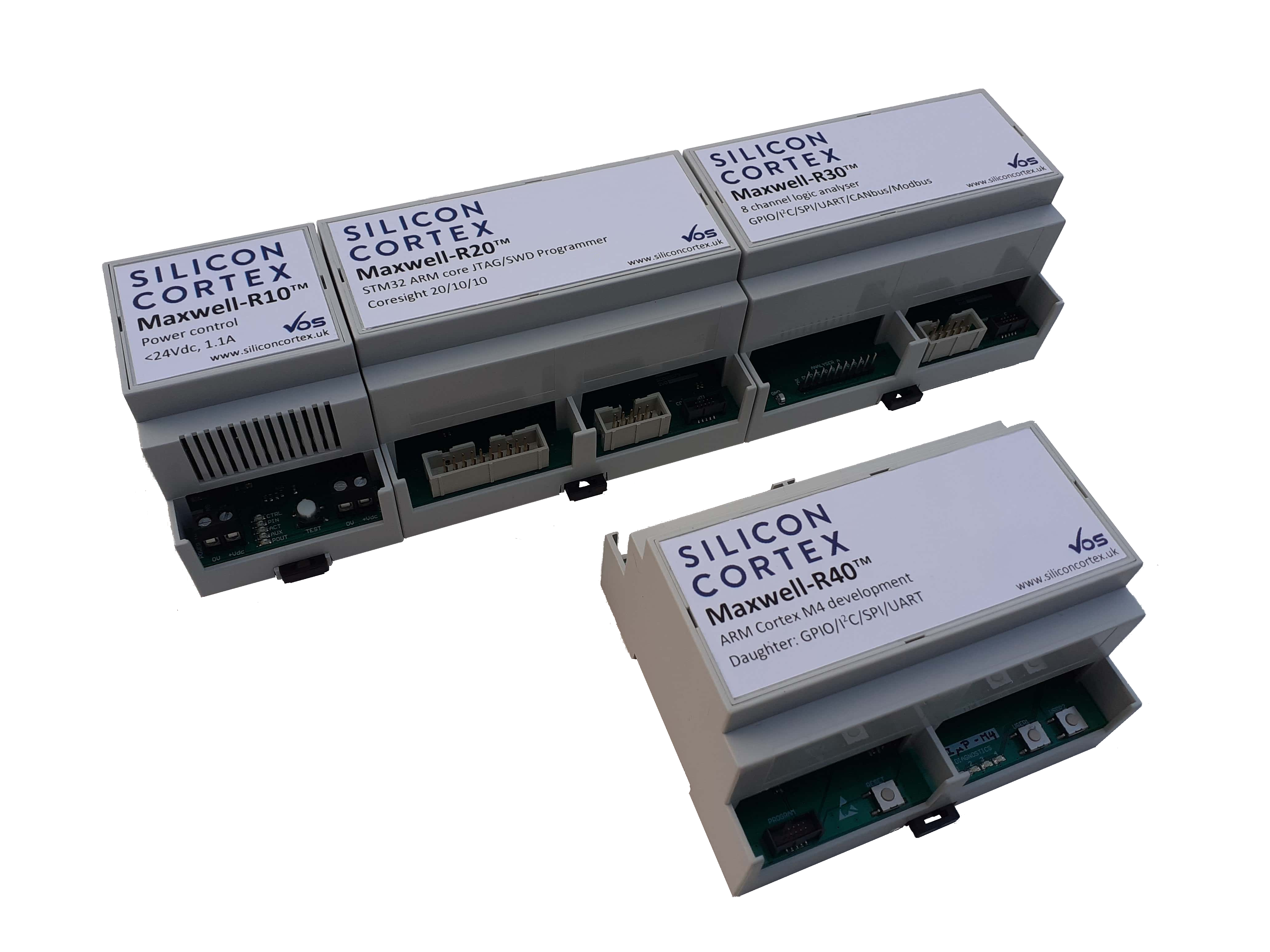
Hardware toolchain to develop electronics
Maxwell™ enables us to work with your engineers on hardware from any global
location via the internet. It operates at a deep technology level to provide project hardware analysis and development capability.
location via the internet. It operates at a deep technology level to provide project hardware analysis and development capability.
Maxwell™ offers unique benefits:
- Project-hardware debugging electronics on I2C, SPI, UART, CANbus and Modbus.
- Project-hardware custom-specification platform for any required function.
- Fast development of project hardware and software from data outputs.
- Header interface on project hardware is the only requirement.
- Eliminates the need for team all being local to hardware.
- Project-hardware ARM core chip programming.
- Maxwell™ is a component of Virtual On-Site™.
- Project-hardware power on-off control.
- Connects to computer via USB
Get in touch
Address
Silicon Cortex Limited
Eagle Lab
28 Chesterton Road
Cambridge
CB4 3AZ
Great Britain